
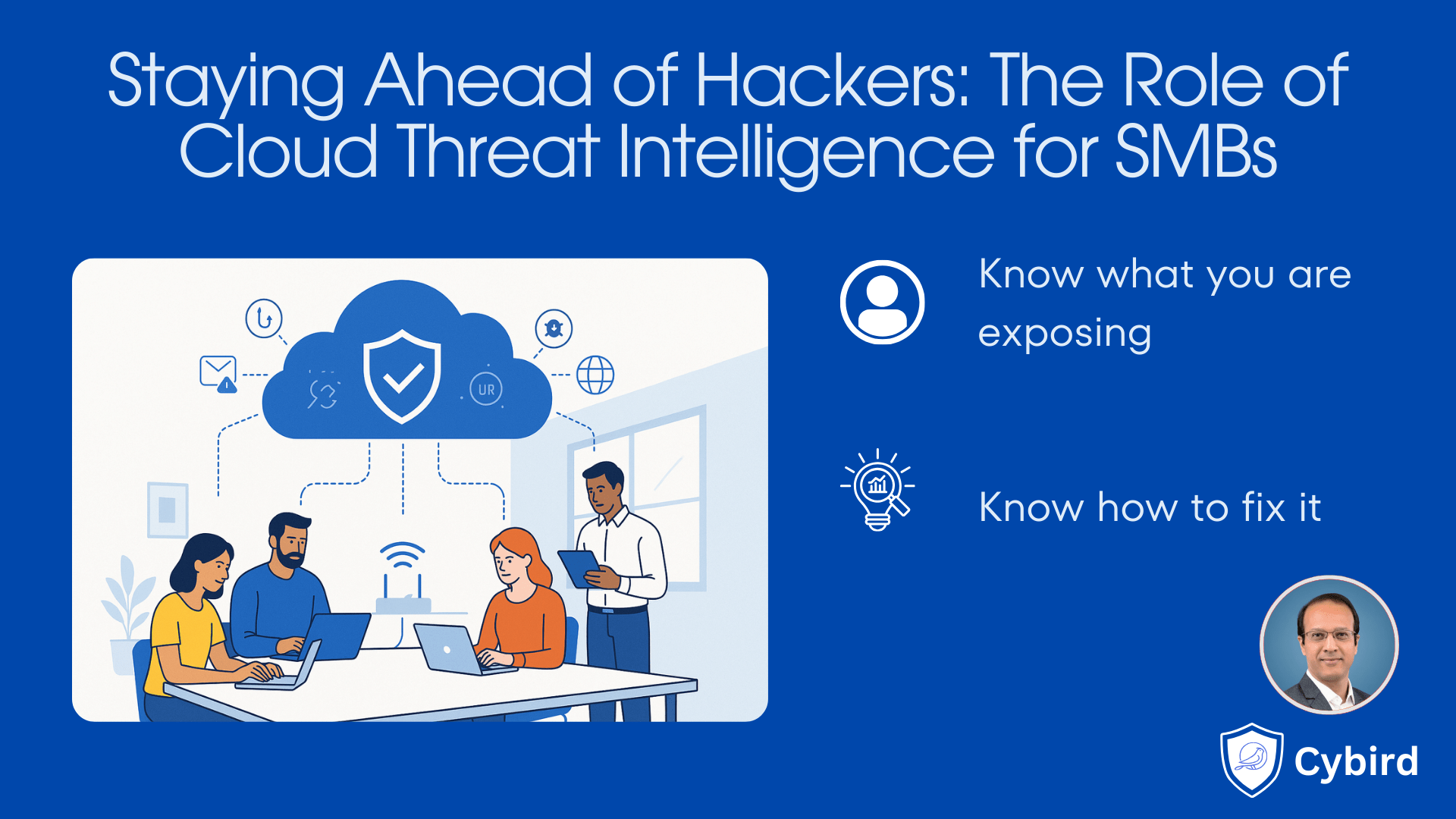
If you run a small or mid-sized business, you’re probably already juggling a lot: customers, staff, cash flow, operations. Keeping up with the latest cyber threats shouldn’t have to be on that list too.
But attackers aren’t standing still. New phishing domains appear every day. Malware authors constantly tweak their code to bypass old defenses. Vulnerable systems get probed within minutes of being exposed online.
No small business can track all of this manually. The good news: you don’t have to.
This is where cloud-based threat intelligence comes in – and why it’s becoming essential for modern SMB security.
Alternate Format of this blog: Podcast
What is Threat Intelligence (in Plain English)?
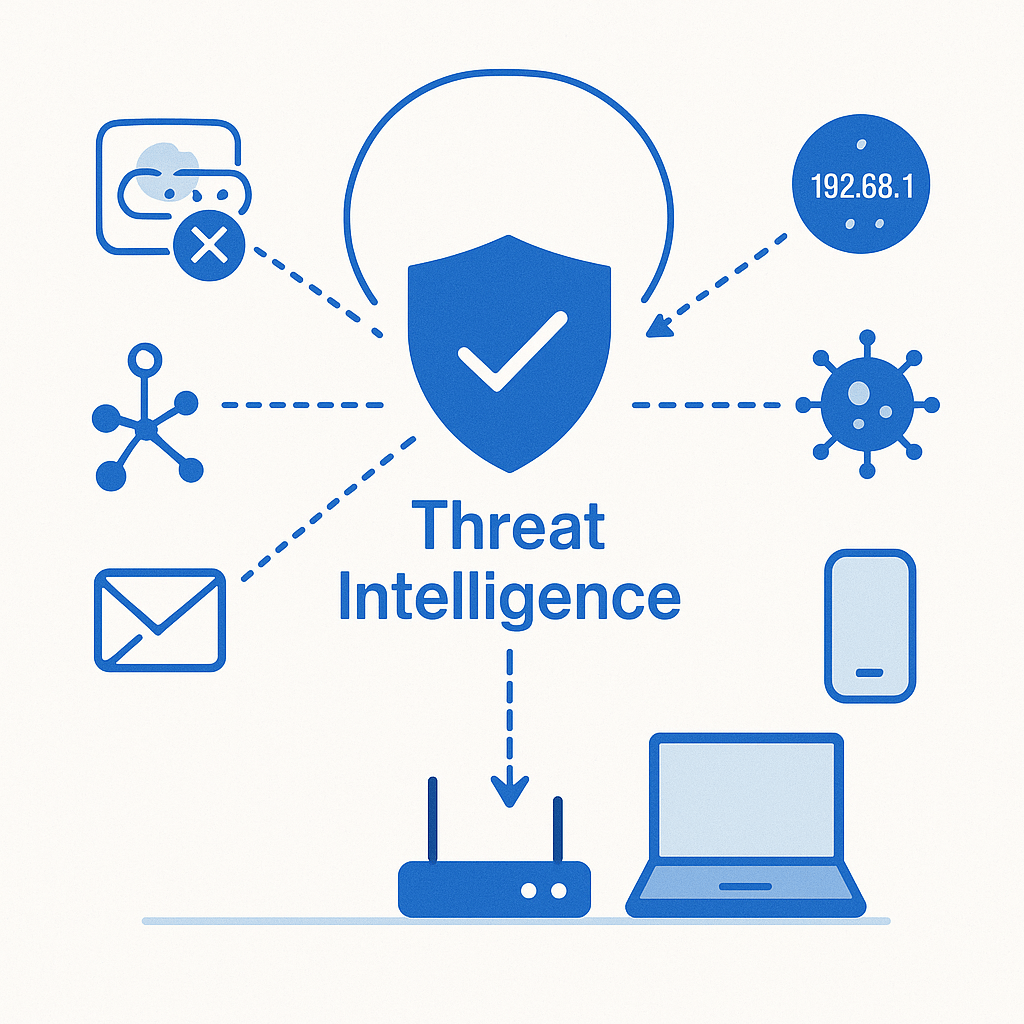
Think of threat intelligence as a live, global “bad stuff” list that your security tools use to protect you.
It’s a constantly updated feed of:
- Malicious domains and URLs (phishing sites, fake login pages, malware download links)
- Dangerous IP addresses (command-and-control servers, known attack sources)
- Virus and malware signatures (patterns that help identify known threats)
- Suspicious behaviors (for example, DNS patterns that often indicate data theft or botnets)
These feeds are built by a combination of:
- Security experts who investigate real attacks around the world
- Automated systems and AI that analyze huge volumes of traffic and detect new patterns
- Global data sharing across many networks, products, and regions
The result: when your security product “checks” a website or a connection, it isn’t guessing. It’s backed by fresh, global intelligence about what’s safe and what’s not.
Why Manual Security Can’t Keep Up
In the early days, security was often about installing a firewall or antivirus box, updating it once in a while, and hoping for the best.
That approach doesn’t work anymore for two simple reasons:
- The threat landscape changes daily
- New phishing pages are created and taken down in hours.
- Attackers constantly register new domains that look like familiar brands.
- Malware variants evolve like living organisms.
- SMBs don’t have time or staff to babysit security tools
- No one in a busy office has time to download and apply signature updates all the time.
- Legacy devices get left “as is” once installed – and grow stale.
Without automatic updates from the cloud, an SMB’s defenses slowly fall behind. It’s like locking your doors but leaving the windows open because you never checked them again after moving in.
Cloud Threat Intelligence: Like a 24/7 Research Team
Now imagine instead that every time your employees browse the web or use cloud apps, your security system quietly consults a global brain in the background.
That’s what cloud-based threat intelligence does.
When your network or DNS requests go through a cloud-managed security service:
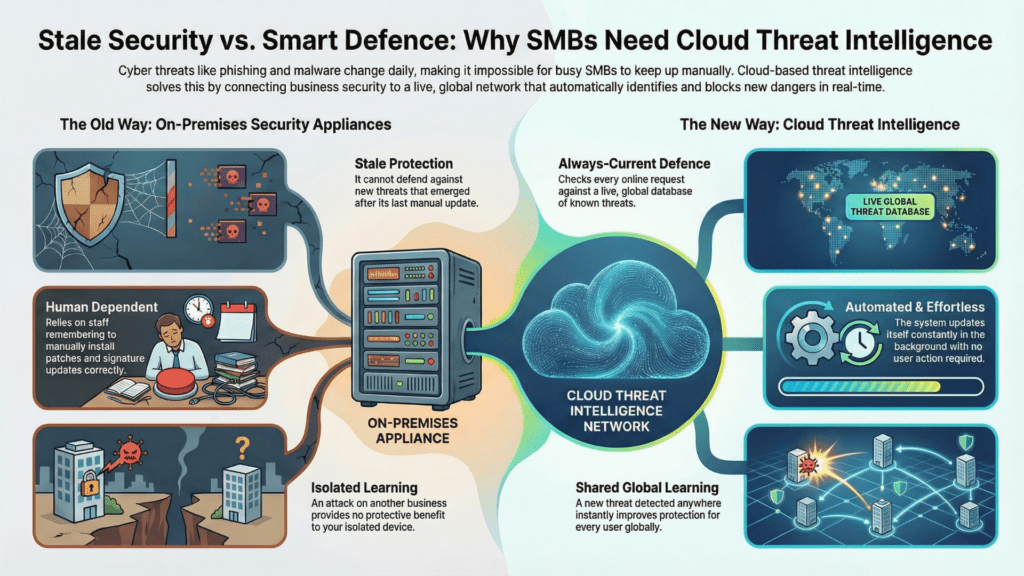
- Every request is checked against live, global data
- Is this domain known for phishing?
- Has this IP been involved in ransomware attacks?
- Has this file hash been flagged as malware elsewhere?
- New threats are learned once, blocked everywhere
- If a new malware strain is detected in one region today,
- the cloud system learns it,
- and can start blocking it for every other customer, in every other region – automatically.
- Updates are continuous, not “once a month”
- You don’t log in to apply a patch.
- There’s no “Are we on the latest version?” stress.
- The system updates itself in the background.
For an SMB, it’s effectively like having a 24/7 global research team watching the internet and updating your defenses in real time – without you hiring anyone.
A Simple Analogy: Last Year’s Flu Shot vs This Year’s
Think about getting a flu shot.
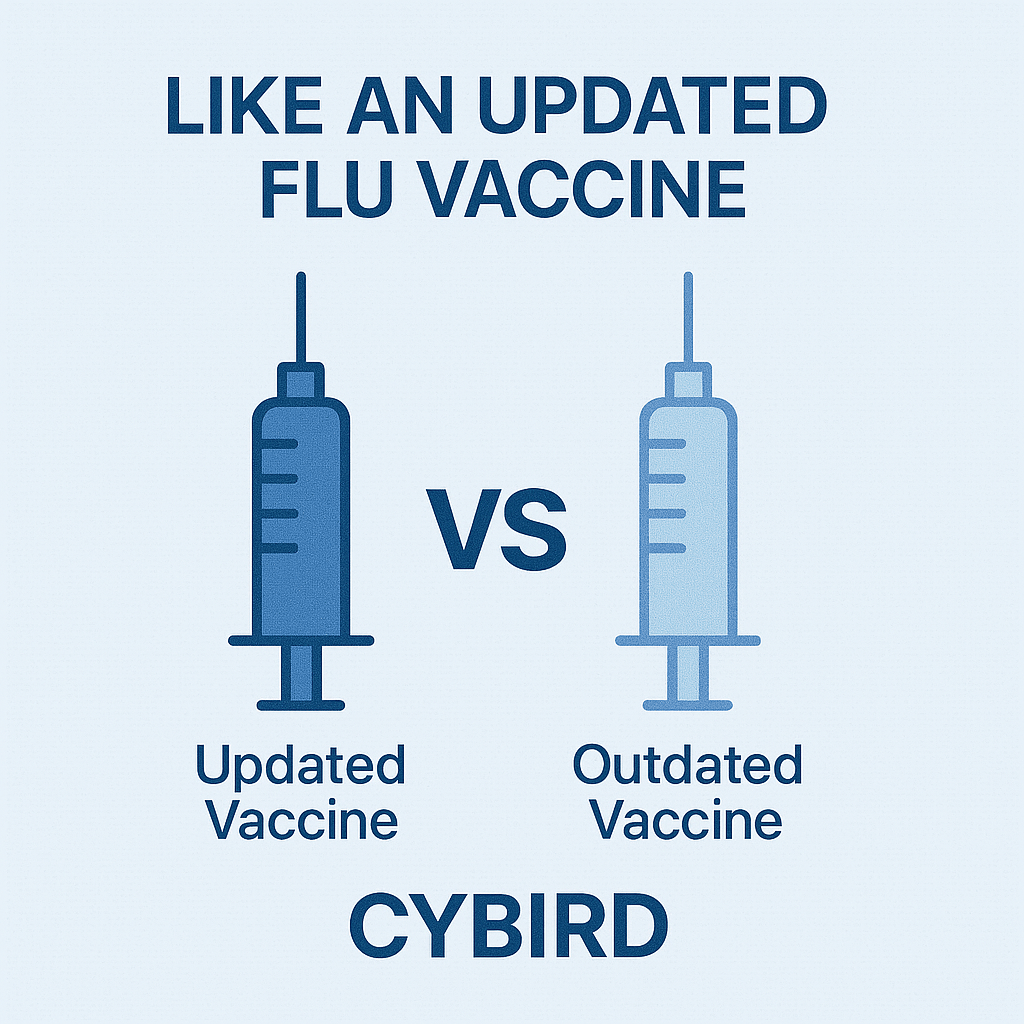
- Every year, health experts analyze which flu strains are circulating and update the vaccine.
- If you used last year’s vaccine against this year’s virus, your protection would be weaker.
Security works the same way:
- Cloud threat intelligence is like getting the current season’s vaccine – tuned to what’s actually circulating on the internet right now.
- Relying on old, offline security appliances that don’t update frequently is like using last year’s flu shot and hoping it’s “close enough.”
In cybersecurity, “close enough” is not good enough anymore.
The Problem with Legacy, Offline Appliances
Many SMBs still have older firewalls or appliances that:
- Sit in a rack on-premises
- Require manual firmware or signature updates
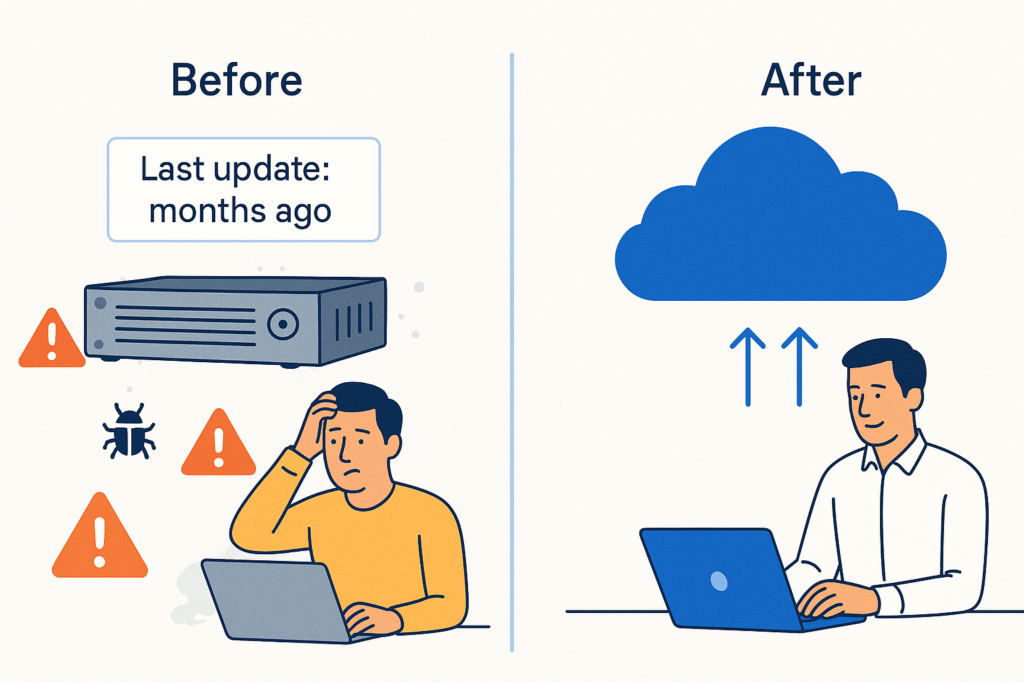
- Often go months or years without being updated properly
The issues with this model:
- Stale protection
If the last update was 8 months ago, it has no idea about the phishing campaign that started last week. - Human dependency
Updates depend on someone remembering, having time, and doing it correctly. - No global learning
If another company gets attacked today, your offline box doesn’t learn anything from that event.
Meanwhile, attackers count on exactly this gap: they know many small businesses are running outdated gear that never receives current threat intelligence.
How Cloud Threat Intelligence Works with Cybird
Cybird is built specifically to bring big-company protection down to the level of small businesses and MSPs – without the big-company complexity.
When an SMB uses Cybird:
- DNS-layer security checks every domain request against cloud threat intelligence to block:
- Phishing pages
- Malware and ransomware sites
- Command-and-control servers
- Known malicious or risky domains
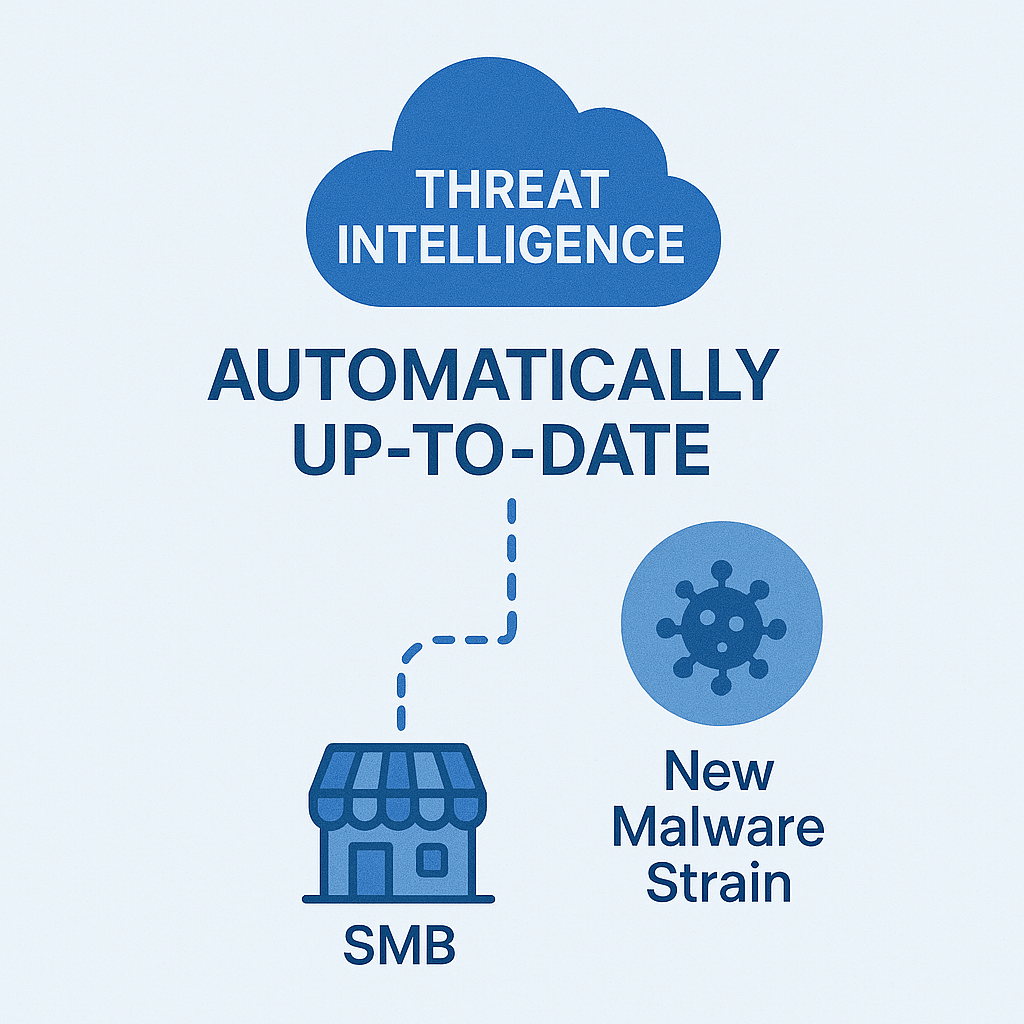
- Threat intelligence is updated in the cloud, not on the device
- As new threats are discovered globally, Cybird’s protection is refreshed across all customer networks.
- There’s no need for your team to log in and “update signatures.” It just happens.
- Protection travels across all Cybird-managed networks
- Office Wi-Fi
- Guest Wi-Fi
- Remote branch or small satellite locations
Every router and every protected network benefits from the same continuously updated intelligence.
For a small business owner, that means:
You don’t have to know what the latest malware family is called.
You just need to know that Cybird is blocking it before it reaches your people.
What This Looks Like in Everyday SMB Life
Here’s a simple example:
- A new phishing campaign starts in another country, using a fresh set of look-alike domains to steal Microsoft 365 passwords.
- Security researchers and automated systems detect it. These domains get added to global threat feeds.
- Cybird’s cloud intelligence ingests and distributes these updates.
- A few hours later, one of your staff accidentally clicks a similar link in a suspicious email.
- The request goes through Cybird – which already “knows” this domain is malicious – and blocks it, showing a safe block page instead.
Your user may not even realize how close they came to handing over credentials. From their perspective, “the link just didn’t work.” From a security perspective, that’s a win.
Reassurance for Businesses Without In-House IT
Many small businesses don’t have:
- A dedicated security team
- Time to read threat reports
- Budget for complex enterprise tools
Cloud threat intelligence changes the game:
- You don’t need to be an expert on cyber threats.
- You don’t need to manually tune rules every week.
- You don’t need to chase updates for every device.
By choosing a cloud-managed platform like Cybird, you’re essentially plugging into a global intelligence network that’s already doing the heavy lifting.
“Always Up-to-Date” Security, Without Extra Work
In the end, the value of cloud-based threat intelligence for SMBs is simple:
- Always current – protection that evolves as attackers do
- Shared learning – one attack helps protect thousands of others
- Low effort – no manual updates, no patch panic
- Enterprise-grade defense, SMB-friendly simplicity
With Cybird, your network security, DNS protection, and threat blocking are all kept up-to-date automatically via the cloud. That means:
- You stay protected against newly emerging threats.
- Your defenses don’t quietly go stale in the background.
- You can focus on running your business, not chasing security updates.
Final Thought
Hackers move fast. Most small businesses can’t – and shouldn’t have to – keep pace manually.
Cloud threat intelligence is how you borrow speed, scale, and brains from the cloud and put them to work for your small business.
With Cybird, you’re not facing the internet alone. You’re backed by continuously updated, global intelligence that keeps your protection one step ahead of cyber criminals – even if you don’t have an in-house IT team.

Founder & CEO of Cybird.